National 16 September 2026
Six States Sign Agreement for Rejuvenation of Yamuna River
Why in the News?
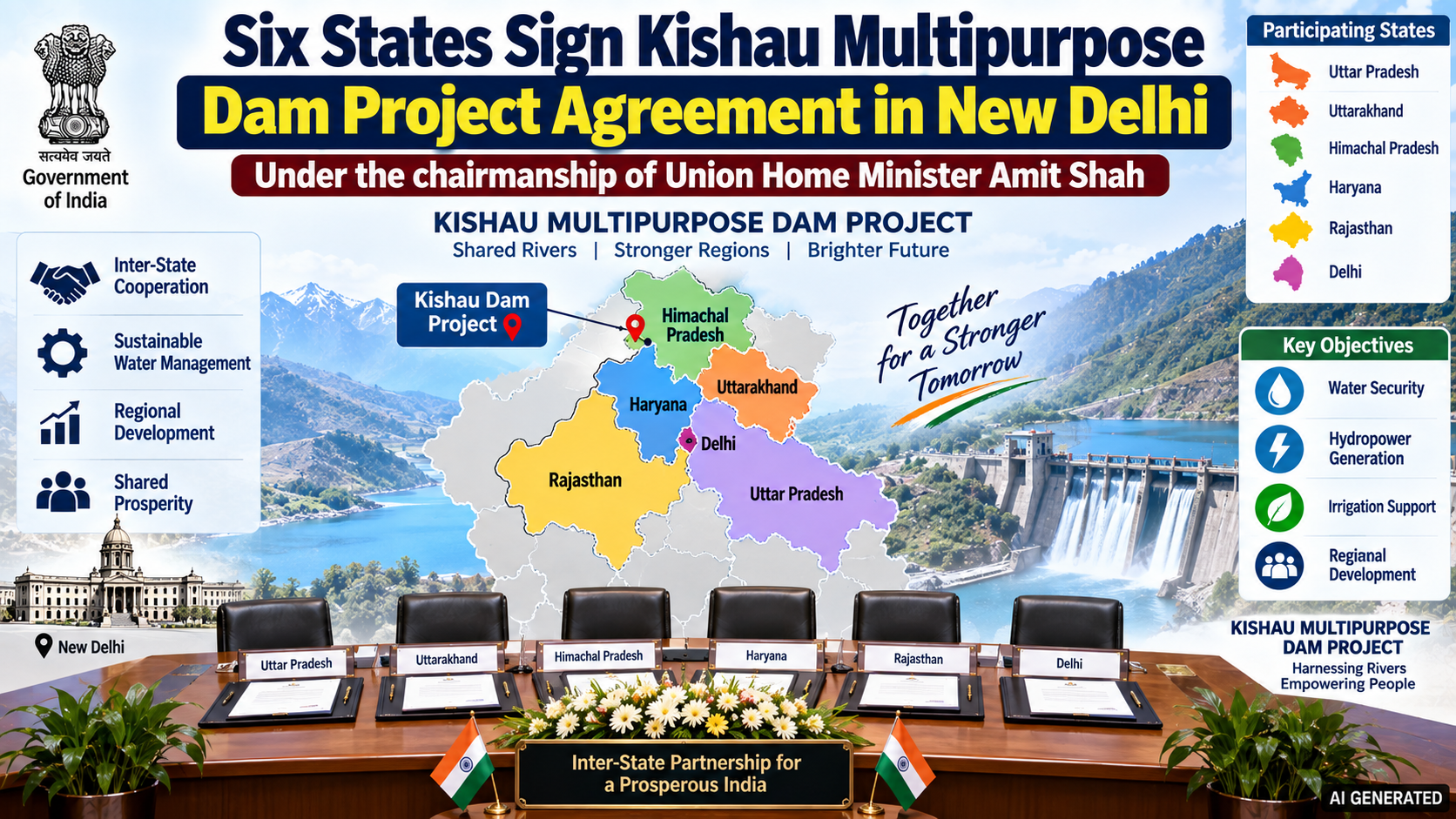
Chief Ministers of six states signed the historic Kishau Multipurpose Dam Project agreement in New Delhi in the presence of Union Home Minister Amit Shah to boost water availability, generate clean energy, and drive the rejuvenation of the Yamuna River.
Key Features / Major Points:
Participating States: The agreement was signed by the Chief Ministers of Uttar Pradesh, Uttarakhand, Himachal Pradesh, Haryana, Rajasthan, and Delhi.
National Project Status and Funding: The Central Government has declared the Kishau Project a National Project, agreeing to shoulder approximately 90 per cent of its financial cost, while participating states will fund the remaining 10 per cent.
Dam Infrastructure & Benefits: The project involves constructing a 232.6-metre-high concrete gravity dam on the Tons River along the Uttarakhand-Himachal Pradesh border. It will generate 422 MW (1,476 million units) of hydropower, irrigate about 97,000 hectares of land, and significantly enhance environmental flows in the Yamuna.
Resolution of Long-Pending Disputes: Home Minister Amit Shah highlighted that this marks the 10th major water-related dispute successfully resolved through consensus during Prime Minister Narendra Modi's tenure.
Static GK Facts:
Kishau Multipurpose Project Location: Planned across the Tons River, a major tributary of the Yamuna, straddling the border of Dehradun (Uttarakhand) and Sirmaur (Himachal Pradesh).
Tons River: The largest tributary of the Yamuna River, originating from the Bandarpunch glacier.
Union Minister of Jal Shakti: C. R. Patil.
One-Liner Quiz (All Competitive Exams):
Q: How many states/UTs signed the Kishau Multipurpose Project agreement for Yamuna rejuvenation?
A: 6 states/UTs (Uttar Pradesh, Uttarakhand, Himachal Pradesh, Haryana, Rajasthan, and Delhi)
Q: On which river is the Kishau Multipurpose Dam Project proposed?
A: Tons River (a tributary of the Yamuna)
Q: What percentage of the project cost will be borne by the Central Government?
A: Approximately 90 per cent