
Wildlife & Environment 02 September 2026
New 'Devil Flower' (Thismia daemona) Species Discovered in Thai National Park
Why in the News?
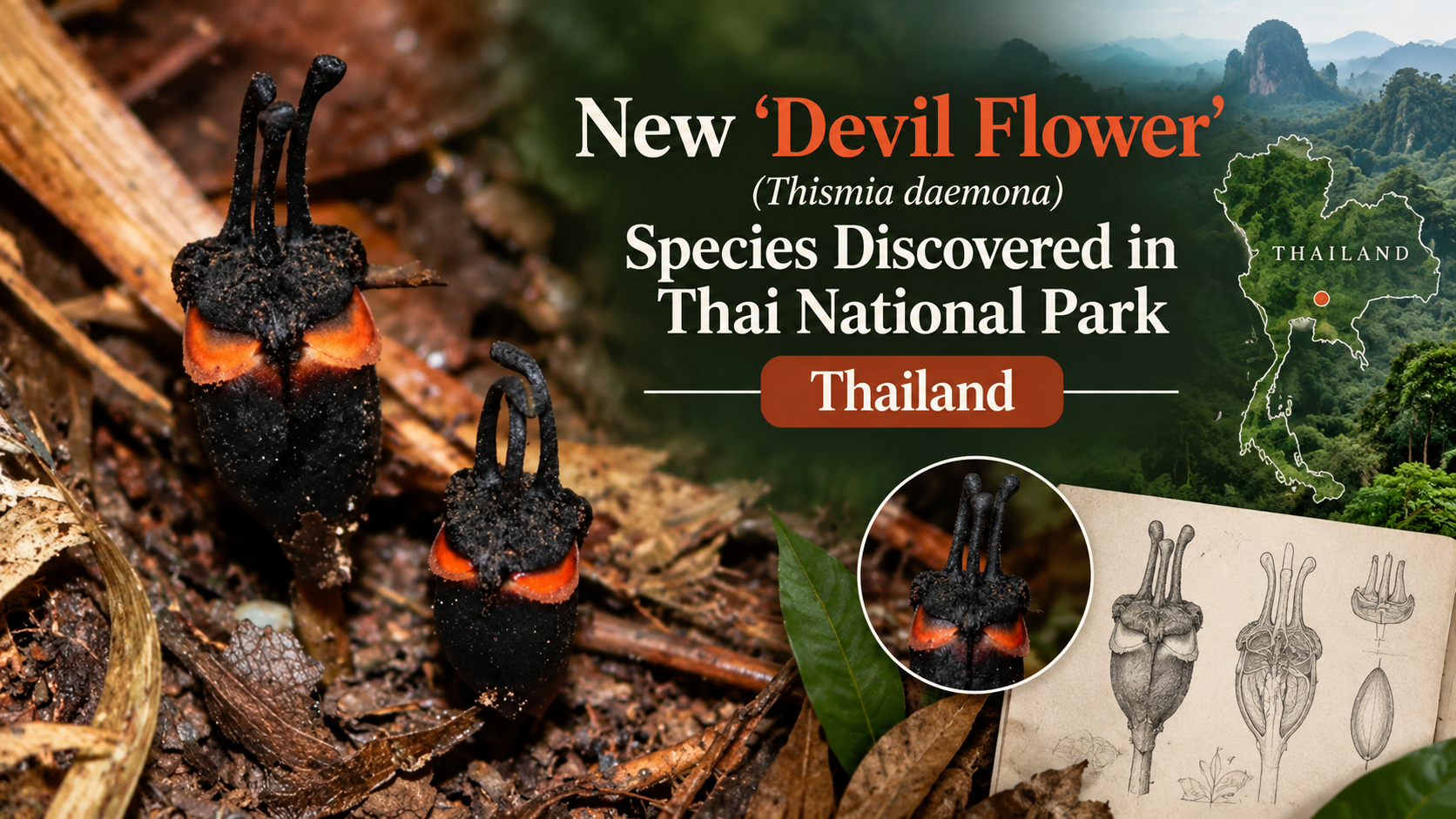
Botanists from Chulalongkorn University and Prince of Songkla University have discovered a new species of leafless flowering plant named Thismia daemona, popularly called the "Devil Flower", in Thailand's Thong Pha Phum National Park.
Key Features / Major Points:
Fairy Lantern Genus: The plant belongs to the genus Thismia, commonly known as "fairy lanterns".
Non-Photosynthetic: Lacks chlorophyll and cannot undergo photosynthesis; it draws nutrients entirely from underground fungi (Mycoheterotrophic).
Distinct Appearance: The flower features a mostly black body with horn-like appendages crowning a dome-shaped "mitre" and vivid reddish-orange patches at the base.
Geographical Significance: Found in a seasonal, montane evergreen forest at nearly 1,000 metres elevation, pushing the known range of Thismia section Geomitra northwards into Thailand.
Conservation Status: Provisionally assessed as Critically Endangered, known from a single population of fewer than 50 individuals. The findings were published in the journal PhytoKeys.
Static GK Facts:
Thong Pha Phum National Park: Located in Kanchanaburi Province, Western Thailand.
Mycoheterotrophy: A symbiotic relationship where a plant obtains food through parasitism upon fungi rather than through photosynthesis.
One-Liner Quiz (All Competitive Exams):
Q: In which country was the new leafless plant species 'Devil Flower' (Thismia daemona) recently discovered?
A: Thailand
Q: What mode of nutrition does the non-photosynthetic Thismia daemona rely on?
A: Underground Fungi (Mycoheterotrophy)
Q: What is the provisional conservation status assigned to Thismia daemona?
A: Critically Endangered